
Cambridge University Press
Cambridge IGCSE™ and O Level Literature in English
Cambridge IGCSE™ and O Level Literature in English
Couldn't load pickup availability
This series supports students through the Cambridge IGCSE, IGCSE (9-1) and O Level Literature in English syllabuses (0475/0992/2010).
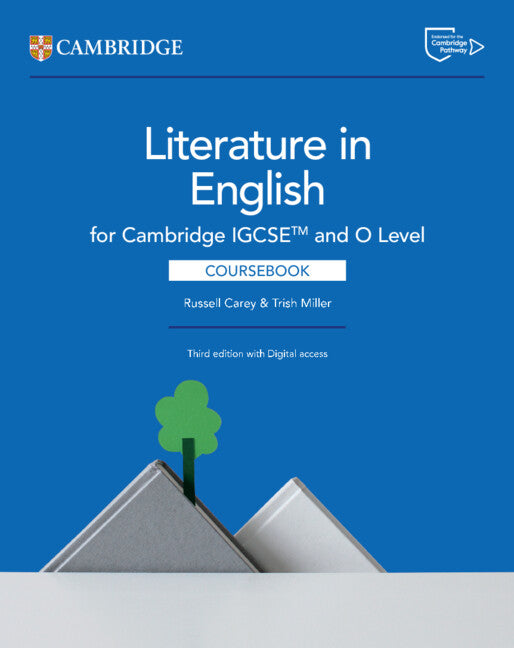
Coursebook
Students will develop critical thinking skills and learn how to respond to different aspects of literary work, across poetry, prose, and drama. From developing an informed personal response to responding to characters and narrative viewpoints, this coursebook helps students recognise and appreciate how writers shape meaning. Students work independently with engaging step-by-step activities, annotated sample answers and guidance tips throughout each unit. Additional support on how to use this coursebook alongside set texts is included, as well as activities you can use across different texts, to help you plan your lessons. Suggested answers to the questions in the coursebook are accessible via Cambridge GO.
Features
- ‘Getting started’ feature provides a warm-up task at the start of each unit, to help you assess what students already know about the topic.
- Varied activities with step-by-step support help students progress towards developing key skills, including evaluation, analysis and inference.
- ‘Set text activity’ feature provides skills-based activities that can be applied to set texts, providing opportunities for students to explore the chosen set texts in more depth.
- Annotated sample answers at different levels help students understand the success criteria and encourage evaluation of their own work.
- Concise strategy tips throughout each chapter provide additional support for developing key skills.
- Key terms are highlighted in the text with precise definitions, covering subject-specific vocabulary and literary devices.
- ‘Further reading’ recommendations including poems, plays and prose encourage a lifelong enjoyment of reading.
- ‘Reflection’ feature encourages students to assess their approach to their work and consider how to adapt and improve.
- ‘Check your progress’ feature provides a summary at the end of each unit, as well as activities and practice questions to consolidate key learnings.
- Self-assessment checklists at the end of each unit help learners assess what they have learnt and consider areas for improvement.
- This publication is still in development, so the accessibility information is currently unknown. We aim for our publications to meet WCAG 2.2 AA. An updated accessibility summary will be provided once available.
Published: March 2026
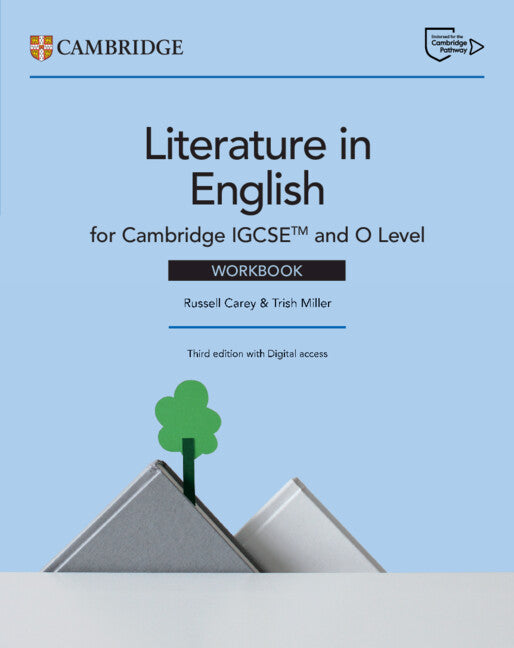
Workbook
This workbook provides additional activities and practice questions to enable students to develop key skills related to each unit. It follows the same chapter structure as the coursebook and teacher’s resource, so you can confidently use it to support the content of your lessons. The activities in the workbook can be used in class as further practice tasks or as homework tasks, for students to demonstrate their understanding. This workbook supports the Cambridge IGCSE, IGCSE (9-1) and O Level Literature in English syllabuses (0475/0992/2010). Answers to activities are available to teachers via Cambridge GO.
Features
- Follows the same structure as the coursebook and reflects the same learning intentions and subject-specific vocabulary, so you can easily use them for your lessons.
- Varied independent activities with step-by-step support help students practice and develop key skills related to each coursebook unit.
- ‘Set text activity’ feature provides skills-based activities that can be applied to set texts.
- Annotated sample answers at different levels help students understand the success criteria and encourage evaluation of their own work.
- Key terms are highlighted in the text with precise definitions including, covering subject-specific vocabulary and literary devices.
- This publication is still in development, so the accessibility information is currently unknown. We aim for our publications to meet WCAG 2.2 AA. An updated accessibility summary will be provided once available.
Published: March 2026
Exam Preparation
Designed to increase your confidence, help you identify and develop different skill areas, recognise different question types, understand connections between concepts, reflect on progress and manage test anxiety. A wealth of questions and activities improve your ability to recall knowledge and answer effectively. Your awareness and familiarity with exam language is increased by the focus on command words, time management and how the marks are broken down within and across exam papers. Self-assessment checklists and sample student responses also help to deepen your learning. The digital resource includes over 100 auto-marked multiple-choice and flip card questions.This text has not been through the endorsement process for the Cambridge Pathway. Any references or materials related to answers, grades, papers or examinations are based on the opinion of the author(s). The Cambridge International Education syllabus or curriculum framework associated assessment guidance material and specimen papers should always be referred to for definitive guidance.
Features
- Organised into two sections, one for reading and one for writing to reflect the structure of the coursebook.
- Each unit develops a range of skill areas, including a focus on general English skills, exam specific skills and questions, recall and connect questions and support for understanding key terms.
- Build useful exam skills through active learning and focusing on questions rather than content summaries.
- Recognise effective learning techniques to become a critical thinker and apply your knowledge beyond the exam.
- Reflection opportunities and self-assessment checklists help you to process your own learning.
- Understand key command words, the variety of question types, how your time should be distributed throughout the exam paper, and how the marks are broken down within and across exam papers.
- The Exam Practice sections give you opportunities to draw your knowledge of several topics together.
Published: June 2026
Share